
Summary
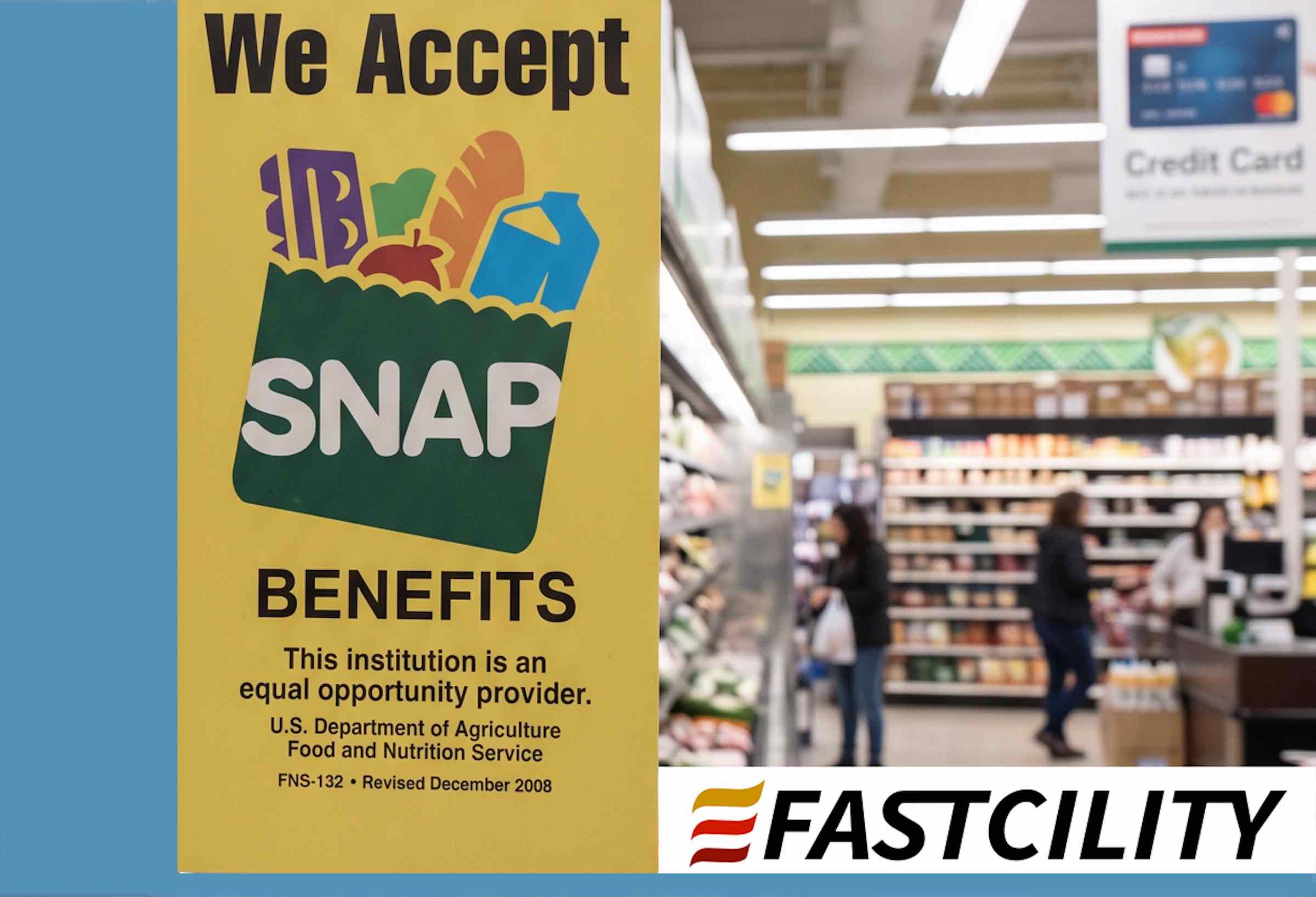
- Starting November 4, SNAP retailers must carry 84 qualifying staple-food items—up from 36. Roller-grill items, in-store sandwiches, jerky, snacks, and soda will not count.
- The rule implements a 2014 law delayed for nearly a decade. USDA finalized it in May as part of its “real food” push.
- USDA pegs the average cost at about $407 per affected store. Nearly 250 convenience retailers say guidance came too late and want a six-month delay.
- With SNAP rolls shrinking and soda-and-candy bans spreading, some small stores may decide the program no longer pays.
USDA’s new SNAP rule comes with a warning for convenience stores: they make up 44 percent of SNAP-authorized retailers, 76 percent of program sanctions, and just 5 percent of SNAP spending.¹
USDA uses those figures to defend a rule that, in its own words, “may render some currently authorized stores ineligible for continued SNAP participation.”¹ Agriculture Secretary Brooke Rollins was blunter in May: USDA is “making sure they’re actually in the business of selling food.”²
State soda and candy bans have drawn more attention. But for small stores, the stocking rule may matter more: it raises the cost of staying in SNAP just as the customer base is shrinking.
How SNAP Works at Checkout
SNAP, also widely known as food stamps, gives low-income households monthly grocery benefits on an EBT card. The average benefit this year is about $188 per person per month, or $6.17 a day.³ It covers food to take home, including cold prepared items, but not hot food.¹
States decide who qualifies. USDA decides which stores may accept the card. About 269,000 retailers are authorized,¹ including more than 117,000 convenience stores.⁴ Rollins says authorized retailers redeem more than $90 billion in benefits each year.²
A 2014 Law Finally Takes Effect
The rule dates to the 2014 Farm Bill, which raised the minimum from three to seven varieties in each of four staple categories—dairy, grains, protein, and fruits or vegetables—and required perishables in three categories instead of two.¹ USDA wrote the requirement into regulations in 2016.¹
Congress then blocked enforcement until USDA revised the definition of “variety” so more products would count.¹ NACS general counsel Doug Kantor has said the 2016 version would have made compliance nearly impossible for many c-stores.⁶ USDA tried again in 2019 and drew more than 9,000 opposing comments.⁷
The third attempt stuck. USDA proposed the rule in September 2025 and finalized it on May 8.¹ Health and Human Services Secretary Robert F. Kennedy Jr. tied it to Make America Healthy Again, saying, “This rule puts real food back at the center of SNAP.”² USDA also cast the rule as an anti-fraud measure, saying it had acted against nearly 3,200 retailers over stocking standards since the administration began.²
The industry split predictably. The National Grocers Association supported the rule; NACS said the variety groupings remained broad and unclear.⁷ Supermarkets already clear the bar. Small stores face the test.
What Counts, and What Doesn’t
Stores must keep 28 distinct staple varieties on hand at all times, with three units of each and at least one perishable item in three of the four categories.¹ The tougher question is what no longer counts.
USDA excludes “accessory foods” such as chips, candy, snack bars, jerky, butter, condiments, and most beverages, including soda, sports drinks, and bottled water.¹ In-store prepared food, hot or cold, also does not count.¹ That leaves roller-grill items, made-to-order sandwiches, and in-house salads out of the compliance calculation, even as foodservice has become a growth engine for c-stores.⁸ NACS says USDA still has not clarified how it will treat sandwiches made at an off-site commissary.⁶
Dairy may be the hardest category. USDA calls it “the biggest challenge for small retailers,” and retailers told the agency cooler space is limited.¹ The final rule helps by counting shredded cheese, sour cream, and flavored milk as separate varieties and allowing up to three plant-based options.¹ But yogurt, cheese, sour cream, and fresh milk still need refrigeration. For many stores, compliance will come down to cooler space.
Shelf space is another constraint. Rob Forsyth, president of Moto Inc., which operates 84 stores mostly in the Midwest, told Marketplace that adding canned green beans, corn, peas, and diced tomatoes at smaller locations would displace stronger-selling products.⁵
When the Inspector Actually Comes
New stores and new locations must meet the standard starting November 4. Existing stores will be evaluated when they renew authorization, typically every five years.¹
Retailers warned Rollins that some stores could “lose their SNAP authorization on day one.”⁴ Existing stores have more runway, but USDA can inspect any store at any time.¹ Stores that fail can lose authorization and must wait six months to reapply.¹ One safety valve remains: invoices showing a sold-out item was ordered or received within the previous 21 days can count toward compliance.¹ Keep those records handy.
Guidance has come late. USDA posted new materials in September and says more is coming.⁹ NACS warns the rule could trigger disputes between stores and inspectors over product classifications.⁶
Retailers Asked for More Time, but No Delay Has Come
On August 31, nearly 250 convenience retailers—including 7-Eleven, Wawa, Sheetz, RaceTrac, and Casey’s—asked Rollins to delay enforcement until six months after USDA issues official guidance.⁴ NACS, the National Association of Truck Stop Operators, and SIGMA supported the request. A USDA spokesperson told Reuters the department “stands by to aid” retailers as they stock 28 varieties.¹⁰ No delay has been announced.
Congress has not granted one either. Sen. Jim Justice, a West Virginia Republican, proposed a farm bill amendment to postpone enforcement, but the Senate Agriculture Committee lacked the votes to advance the bill in early August.⁶
USDA estimates first-year costs at about $77 million across current retailers, or roughly $407 for each store that needs more varieties.¹ That estimate appears to cover staff time and restocking, not major equipment such as new refrigeration.
The Squeeze: A Higher Bar and Fewer Customers
USDA wants c-stores to stock more fresh, whole foods for SNAP shoppers. Other policies are making those shoppers less valuable to the stores.
SNAP enrollment fell from 42.2 million people in May 2025 to 36.6 million in May 2026 after last year’s budget law expanded work requirements and tightened eligibility.¹¹ By June, USDA had approved soda and candy restrictions in 23 states,⁷ though a federal judge later ruled that five approvals exceeded the agency’s authority.¹¹ Numerator estimates those restrictions could cut sales by up to $430 million for soda, $300 million for candy, and $100 million for energy drinks in adopting states.¹² Those are core c-store categories.
Shelly Ver Ploeg of the National Center for Food and Agricultural Policy told Marketplace the added cost and hassle could push some small stores to drop SNAP, especially with fewer SNAP shoppers coming through the door.⁵ Forsyth said Moto may drop SNAP at some smaller locations.⁵ USDA seems prepared for that outcome: the rule says c-stores “do not provide significant points of access for SNAP households” and points to online grocery ordering as an alternative.¹
If enough small stores leave, a rule meant to put more fresh food in front of SNAP shoppers could leave some neighborhoods with fewer places to use benefits. Tribal governments raised that concern during USDA consultations.¹
Every Store Needs Its Own Answer
For multi-location operators, the decision should be store by store. Compare each location’s EBT sales with the cost of closing gaps in USDA’s variety groups. Dairy is the likely trouble spot, and fixing it may require cooler space the store does not have.
Know each location’s reauthorization date, and keep 21-day invoices as proof of compliance.¹ USDA can inspect at any time, so waiting for renewal is risky.
For stores that are the only food option for miles, this is more than a margin decision. For others, SNAP becomes a shelf-space question after November 4: does it still earn its place?
Sources
1. U.S. Department of Agriculture, Food and Nutrition Service, “Updated Staple Food Stocking Standards for Retailers in the Supplemental Nutrition Assistance Program,” Federal Register, May 8, 2026. https://www.federalregister.gov/documents/2026/05/08/2026-09137/updated-staple-food-stocking-standards-for-retailers-in-the-supplemental-nutrition-assistance
2. U.S. Department of Agriculture, “USDA Requires SNAP Authorized Retailers to Carry More Real Food,” press release, May 7, 2026. https://www.usda.gov/about-usda/news/press-releases/2026/05/07/usda-requires-snap-authorized-retailers-carry-more-real-food
3. Center on Budget and Policy Priorities, “A Quick Guide to SNAP Eligibility and Benefits,” updated October 3, 2025. https://www.cbpp.org/research/food-assistance/a-quick-guide-to-snap-eligibility-and-benefits
4. Convenience and fuel retailers, letter to Agriculture Secretary Brooke Rollins, “Ensuring Adequate Implementation Time for SNAP Stocking Standards Rule,” August 31, 2026 (hosted by the National Agricultural Law Center). https://nationalaglawcenter.org/wp-content/uploads/2026/09/retailers-snap-request-letter.pdf
5. Carla Javier, “Smaller stores grapple with how to adapt to changes in SNAP,” Marketplace, May 25, 2026. https://www.marketplace.org/story/2026/05/25/snap-changes-leave-small-convenience-stores-in-a-tight-spot
6. NACS, “What Convenience Retailers Need to Know About SNAP,” August 10, 2026. https://www.convenience.org/stay-current/news/2026/august/10/what-convenience-retailers-need-to-know-about-snap
7. Emily Stone, “USDA Updates Stocking Standards for Authorized SNAP Retailers,” National Agricultural Law Center, June 9, 2026. https://nationalaglawcenter.org/usda-updates-stocking-standards-for-authorized-snap-retailers/
8. Fastcility, “C-Stores Won the Foodservice War. Now They Have to Run a Kitchen.,” April 20, 2026. https://fastcilitycorp.com/2026/04/20/c-stores-won-the-foodservice-war-now-they-have-to-run-a-kitchen/
9. USDA Food and Nutrition Administration, “Retailer Notice: New Guidance on How to Meet the Updated Staple Food Stocking Standards,” September 2026. https://www.usda.gov/sites/default/files/guidance-documents/fna.snapRetailerNotice-StockingStandardsWebUpdates090426.pdf
10. Shubhendu Vimal, “Retailers urge USDA to postpone new SNAP stocking mandate,” Retail Insight Network (citing Reuters), September 7, 2026. https://www.retail-insight-network.com/news/retailers-usda-snap-stocking-mandate/
11. Mandy Taheri, “SNAP Benefits Update: Map Shows States With Biggest Enrollment Decline,” Newsweek, August 21, 2026. https://www.newsweek.com/snap-benefits-update-map-shows-states-with-biggest-enrollment-decline-12353832
12. The Shelby Report, “Report: 19 States To Restrict SNAP Soda, Candy Purchases By End Of 2026” (Numerator data), May 27, 2026. https://theshelbyreport.com/2026/05/27/report-19-states-to-restrict-snap-soda-candy-purchases-by-end-of-2026/