Summary
- Restaurant bankruptcy filings are on pace to pass 2020, and several large franchisees are among them.
- When a franchisee fails, the franchisor often decides who ends up with the restaurants. Bloomin’ Brands and Wendy’s have each made opening bids for a bankrupt franchisee’s units.
- Lawyers who advise franchisors watch for a short list of warning signs. Independents can read the same signs in their own books each month, while a lender, landlord or vendor still has options to offer.
Restaurant bankruptcy filings are on track to pass 2020, the year of the pandemic closures, according to BankruptcyData figures reported by Bloomberg Tax.¹ By mid-September, there were at least 10 significant multi-unit franchisee filings in 2026, covering several hundred locations.²
Franchise cases document what went wrong in unusual detail, because franchisors, courts and lenders leave a public record. That record points to signs any operator can check in a monthly review, and most appear well before a filing.
A hard year for thin margins
Franchisees entered 2026 with no room for a bad year. Food and labor costs are up 36% since 2019, and franchisee pretax margins typically run 3% to 5%, according to restructuring lawyer Bradford Sandler.² Independents sit in the same band, with median pretax margins of 2.8% for full-service restaurants and 4.0% for limited-service, according to the National Restaurant Association.³
Menu prices rose to cover those costs, and diners are pushing back. In a July 2026 Toast survey, only 18% called price increases justified, down from 41% in 2024.⁴ Restaurant Dive reports that higher prices have cut customer counts,² and the NRA projects real restaurant sales to grow just 0.8% in 2026.⁵
The filings have followed. Sandler called 2024 a peak year, with 16 chains or large franchises filing by August, and said 2025 brought more than 20. He said 2026 is on pace to match or exceed that.² Others see less of a break from the past, noting that filings are near pre-pandemic levels.²
Franchisors are choosing who gets the keys
Out West Restaurant Group, which operates 61 Outback Steakhouse restaurants, filed for Chapter 11 on Nov. 2. Bloomin’ Brands lined up a $26.3 million opening offer to buy the restaurants as the case opened. An opening bid like this sets the floor price, and rivals can offer more.⁶ Bloomin’ said ownership would give it direct operational insight, and the deal could put a majority of its U.S. franchised Outbacks under company control.⁷ The strain was visible early: in December 2023, Out West, Bloomin’ and the franchisee’s lenders agreed to delay payments.⁶
Wendy’s took a similar path with Meritage Hospitality Group. Meritage defaulted on its franchise agreements and still had not paid royalties when an extension expired in August. Wendy’s terminated the agreements in September, and Meritage filed for bankruptcy that month.⁸ In November Wendy’s made a $46 million opening bid for 163 restaurants. If it wins them all, Wendy’s would operate about 10% of its more than 5,700 domestic locations, its largest share in a decade.⁹
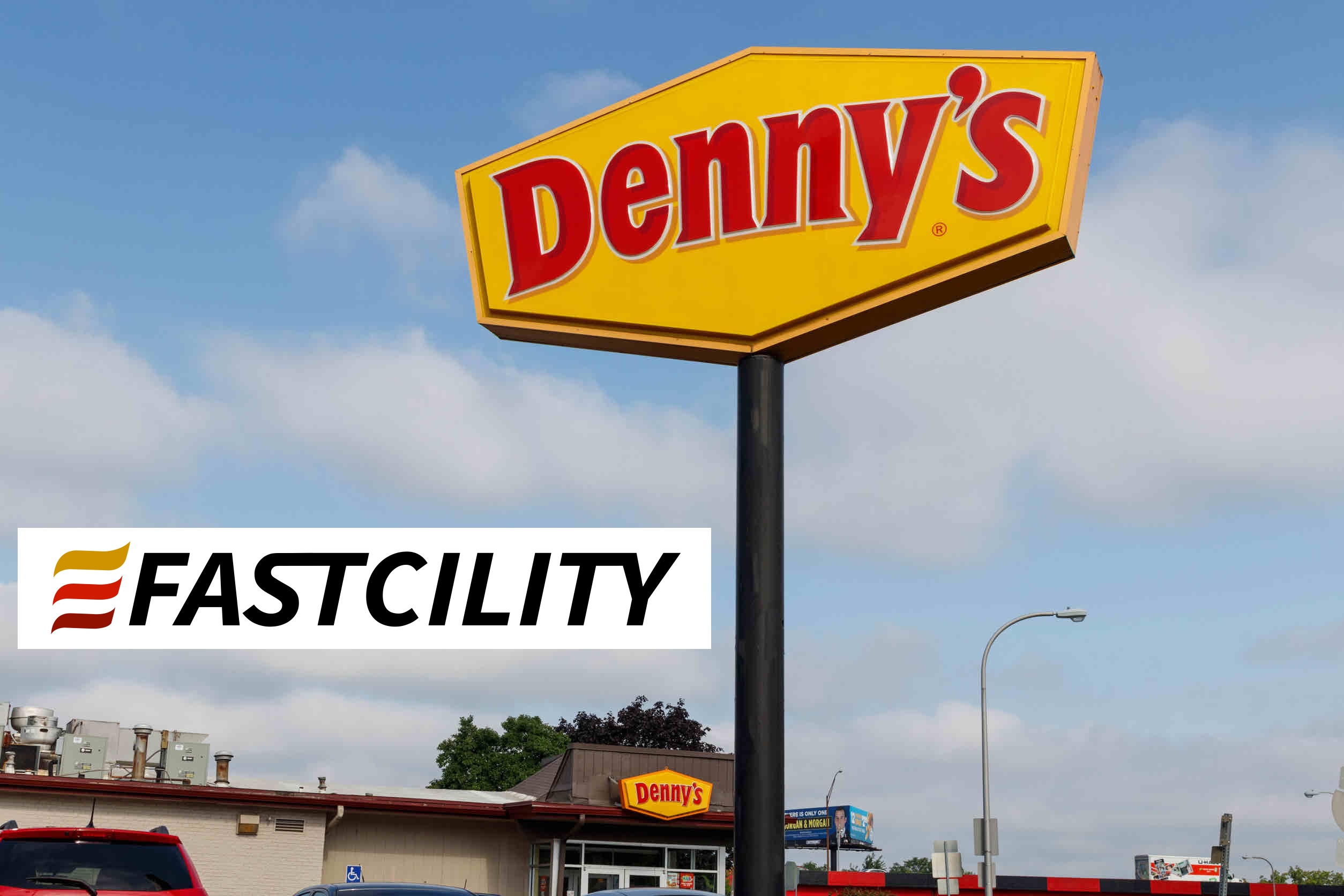
Denny’s chose another route. With EYM Diner, a 30-unit Denny’s operator, in Chapter 11, the chain is working with the owner to sell the restaurants to other Denny’s franchisees.¹⁰
Franchisors can steer these sales because of their contracts, which typically give them termination rights, the power to require de-identification and the right to approve or block transfers.¹¹ The deals are still pending. Both bids can be topped, and Bloomin’s needs court approval.⁶ ⁹
Why independents should pay attention
The pressures behind these cases are shared. A franchisee with a 3% to 5% margin and an independent at the 2.8% to 4.0% median face the same costs, the same cautious diners and the same thin cushion.² ³
The sequence matters too. Out West and Meritage fell behind on their obligations long before a judge was involved.⁶ ⁸ An independent has no franchisor, but it answers to a landlord, a lender and suppliers, and each of them notices a late payment. Nixon Peabody advises franchisors to track franchisee financial health in real time instead of quarterly.¹¹ Owners can get there first by checking the same signals themselves.
What to watch in your own books
Nixon Peabody’s list of franchisee distress signs reads like a checklist for any owner: late royalty payments, deferred maintenance, incomplete remodels, declining unit volumes and vendor complaints.¹¹ The filings add cash advances and unpaid taxes. Together they make five checks that fit on one page.
- Cash advances and short-term borrowing. Look for daily or weekly draws against sales. Sandler said MTF Enterprises, a Subway franchisee, cited merchant cash advances as the primary cause of its collapse, and he called such advances “usually the last chapter before a bankruptcy filing.”² If they show up in your books, callyour lender or accountant that week.
- Bills paid late. Track rent, vendor invoices and payroll taxes, and how many days each runs past due. Unpaid royalties led Wendy’s to terminate Meritage’s agreements,⁸ and EYM Diner’s largest unsecured creditor is the IRS, owed nearly $3.5 million in payroll taxes.¹⁰
- Deferred maintenance. Keep a service log for every cooler, freezer, ice machine and dispenser, and list the repairs you have postponed. Insurers can contest equipment claims tied to deferred maintenance.¹²
- Guest counts alongside sales. Price increases can keep sales flat while customer counts fall, so track weekly guest counts and average check as separate numbers.²
- Prime cost and fixed commitments. Food plus labor is the first number to watch, and the median limited-service restaurant spends 65 cents of each sales dollar on it.³ Compare your weekly figure with your recent average. Then list your fixed commitments, such as the lease, loans and required upgrades, and ask which can be renegotiated.
Put the five checks on one page each month. The trend across months says more than any single month.
What the next year looks like
Cost pressure is still broad. More than 9 in 10 operators cite food, labor, insurance, energy and swipe fees as significant challenges,¹³ and sales growth is projected at just 0.8%. With growth that slow, margin has to come from the lines an owner controls.
The encouraging part is that early options exist. Wendy’s says it plans to offer struggling operators operational support, royalty deferment or targeted closures.⁹ Nixon Peabody advises franchisors to consider lease or royalty changes before a filing.¹¹ An owner who raises a problem early has more of those conversations available.
Franchisors read these signs in their operators’ books and then decide what happens next. An owner who reads them first, every month, keeps that decision.
Sources
- Bloomberg Tax, Alex Wolf, Fast-Food Bankruptcies Surge as Costs Climb, Consumers Pull Back (August 28, 2026; the full article is behind a login)
- Restaurant Dive, Danielle McLean, Why multi-unit restaurant franchisee bankruptcies are surging in 2026(September 16, 2026)
- National Restaurant Association, New resource provides insights into operational realities (August 2025)
- Toast, Diner pricing survey data, July 2026
- National Restaurant Association, Restaurants remain resilient despite challenging business conditions
- FSR Magazine, 61-unit Outback Steakhouse franchisee files for bankruptcy
- Restaurant Dive, Outback Steakhouse franchisee bankruptcy, 61 units (November 3, 2026)
- Nation’s Restaurant News, Jonathan Maze, Wendy’s stakes its claim in the Meritage Hospitality bankruptcy(September 22, 2026)
- Nation’s Restaurant News, Wendy’s poised to become a bigger operator of its restaurants (November 16, 2026)
- Nation’s Restaurant News, Joe Guszkowski, A 30-unit Denny’s operator files for bankruptcy (November 5, 2026)
- Nixon Peabody, Protecting the brand under pressure: Navigating QSR franchisee bankruptcies (August 12, 2026)
- Fastcility, Your insurance policy has a maintenance clause (March 17, 2026)
- National Restaurant Association, Persistent cost increases and enduring demand will shape the restaurant industry in 2026