
- NOAA-tracked weather stations logged more than 1,000 daily temperature records in June 2026 and another 1,400-plus through July 19, with a heat dome in late June and early July exposing more than 200 million Americans to dangerous heat.⁸
- Independent restaurants and cafes in Philadelphia, Manchester, London, and Leicester have each closed kitchens or restructured hours this summer, a pattern reported separately by unrelated local outlets rather than traceable to one story.¹ ²
- No federal rule requires any of it. OSHA’s proposed indoor and outdoor heat standard has been stalled since its extended comment period closed on October 30, 2025, with no finalization date set.⁵
- California is the exception. Its Title 8, Section 3396 standard requires indoor workplaces, restaurant kitchens included, to act once temperatures reach 82°F, and a handful of other states have rules of their own. Most of the closures reported this summer happened in places with no such requirement.⁶ ⁷
- One Philadelphia restaurant that closed during a slow stretch reported a fully booked dining room the following Friday, meaning the decision to close gave up real, available revenue rather than covering for its absence.¹
A Summer That Broke the Instruments
Summer 2026 has not been a typical hot stretch. NOAA-tracked weather stations recorded more than 1,000 daily high-temperature records in June alone, and by July 19 the country had logged more than 1,400 additional daily records, according to a NOAA data analysis published by Weather On This Day.⁸
A heat dome in late June and early July pushed dangerous heat over more than 200 million Americans across the East and Midwest, and a second dome settled over the northern Rockies and Plains in mid-July, where Montana broke 130 daily heat records in a single stretch.⁸ Death Valley, California, reached 120.9°F on July 15, the hottest reading recorded anywhere in the country this year.⁸
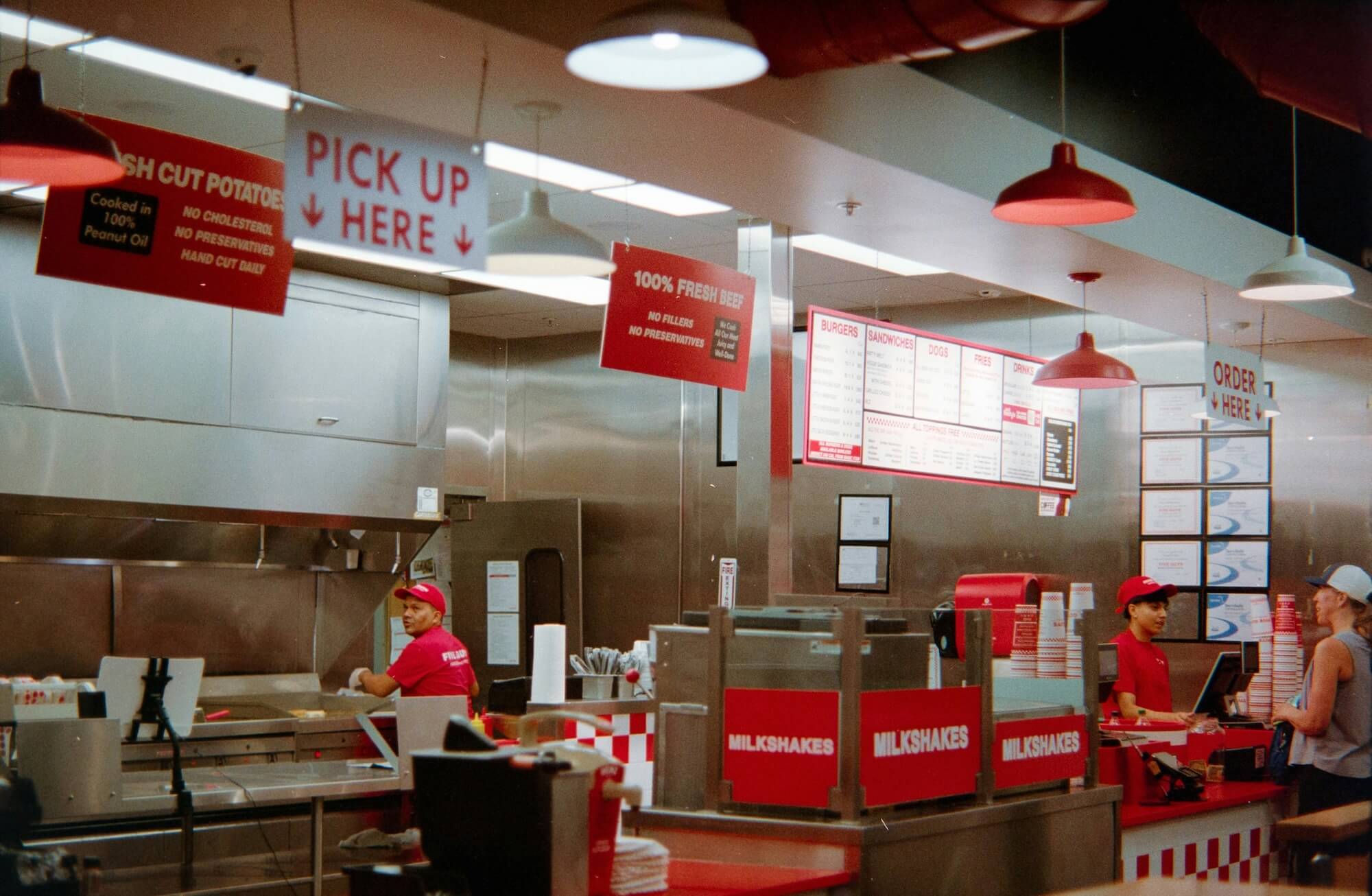
The big problem is that a restaurant kitchen already runs hot before any of that extreme weather arrives. Ovens, fryers, and stovetops routinely push kitchen temperatures to 120°F and beyond even in a normal summer.⁹ When outdoor heat this extreme layers on top of equipment that already generates its own heat load, the conditions restaurant owners describe this year, grill-side temperatures running 95 to 115 degrees, according to operators in New York and Massachusetts, are not exaggeration.⁴ ³
The Response Isn’t Uniform
If this were a single restaurant’s marketing story, it would be easy to dismiss, but it’s not. In Philadelphia, chef-owner Michael Brenfleck closed Little Walter’s in early July when heat thrown off by its wood-fired grill, which he estimates at roughly 120 degrees on its own, combined with a broader heat wave to make the kitchen unbearable.¹ In Manchester, Food Works closed its kitchen for several days in late June, telling customers on Instagram that insufficient air conditioning combined with kitchen heat had made conditions unsafe to continue.²
In the same stretch, Robins Pie & Mash closed three of its six English locations, Toad Bakery in Camberwell shut its doors citing extreme temperatures, and Kaffee London in Putney halved its hours rather than close outright.² Nemo’s in Leicester chose a middle path, closing its kitchen for scheduled hour-long breaks during the worst of the heat rather than closing for the day.²
Other operators chose to stay open and adapt instead. At White Hut in West Springfield, Massachusetts, supervisor Mike Hiller has been rotating staff through the restaurant’s walk-in cooler for a few minutes at a time during a multi-day heat wave rather than closing the kitchen.³
At Church Street Diner in Carthage, New York, owner Dawn Lelakowski described grill-side temperatures averaging 95 to 115 degrees and said keeping the dining room comfortable for customers has been the priority even as the kitchen itself stays hot.⁴
The Regulation That Isn’t There Yet
What’s notably absent from most of these decisions is a legal requirement to implement them. OSHA’s proposed Heat Injury and Illness Prevention standard, which covers both outdoor and indoor work environments, has been in development since a Notice of Proposed Rulemaking was published in August 2024. Its extended post-hearing comment period concluded on October 30, 2025, and no finalization date has been set since, according to labor and employment attorneys Dee Anna D. Hays and Karen F. Tynan of Ogletree Deakins.⁵ In the meantime, OSHA’s sole enforcement tool for heat is the General Duty Clause, which mandates a workplace free of recognized hazards but does not specify a particular temperature threshold.⁵
California stands out as an exception to this trend. Its Title 8, Section 3396 standard, which came into effect in July 2024, mandates that indoor workplaces, including restaurant kitchens, develop a written heat illness prevention plan, designate a cool-down area, and take other specific actions once indoor temperatures reach 82°F.⁶
Minnesota and Oregon also have their own indoor standards, while Colorado, Maryland, and Nevada have rules in various stages of development.⁷ However, Pennsylvania, Massachusetts, New York, and the United Kingdom, where all the closures and adjustments mentioned above actually occurred, lack comparable indoor heat standards. Notably, the UK does not have any legal maximum workplace temperature; instead, it provides guidance.
This absence is the underlying reason for the restaurants closing their kitchens this summer. In most cases, these closures are driven by the restaurants’ own initiative rather than being mandated by any regulatory authority.
What the Math Shows
The real question is why operators are choosing closures in an industry that can least afford to turn away paying customers, especially when no one is requiring them.
The revenue math argues against a cost-cutting motive. Brenfleck mentioned that reservations at Little Walter’s were light over the holiday weekend it closed, but the restaurant was nearly fully booked the following Friday.¹ Closing meant giving up seats that would have been filled, precisely when demand for the restaurant was proven to still exist. This doesn’t align with the arithmetic of an operator covering for a lack of customers. It’s more like an operator choosing to forgo customers who were there.
On the other hand, the liability math points the other direction. Even without a specific federal heat standard, unsafe indoor heat conditions expose operators to several real costs. These include workers’ compensation claims from affected staff, potential employment practices liability claims if conditions are deemed unsafe, and general liability exposure if a customer, not just an employee, is harmed by heat in the dining room.⁹ Where enforceable standards exist, the penalties are not symbolic.
For instance, a Cal/OSHA citation issued in December 2024 for willfully violating indoor heat illness prevention requirements amounted to $276,425. This serves as a useful reference point for what enforcement looks like once a jurisdiction has actually written a number into law.¹⁰Notably, Oregon assesses heat violations individually rather than as a single fine, which multiplies the exposure for an operator with several affected shifts or locations.⁹
When we set these two forces side by side, the closures read less like a public relations gesture and more like a risk calculation operators are increasingly willing to make on their own, even before any regulator requires it. The cost of one lost dinner service is smaller and more predictable than the cost of a heat-related injury, a workers’ compensation claim, or a citation in a jurisdiction where the rules already exist. This calculation would look very different if traffic were too weak for a closure to cost anything to begin with. However, it is not: operators are giving up real, provable business to make this decision, which distinguishes it from either a savings measure or a feel-good story.
Sources
- Michael Klein, “Philly’s kitchen professionals endure one heat wave after another,” The Philadelphia Inquirer, July 17, 2026. https://www.inquirer.com/food/chefs-heat-wave-kitchens-gilda-sao-little-walters-20260717.html
- Chris Leadley, “UK Heatwave Causing Restaurants and Bakeries to Close,” Forbes Burton, June 24, 2026. https://www.forbesburton.com/news/uk-heatwave-restaurants-bakeries-close
- Western Mass News (WGGB/WSHM), “No break from the heat: Restaurant workers push through the heat wave,” July 3, 2026. https://www.westernmassnews.com/2026/07/04/no-break-heat-restaurant-workers-push-through-heat-wave/
- WWNY, “North Country kitchen workers push through summer heat,” July 2, 2026. https://www.wwnytv.com/2026/07/02/north-country-kitchen-workers-push-through-summer-heat/
- Dee Anna D. Hays and Karen F. Tynan, “OSHA’s Heat Program to Expire While Heat Standard Stalls,” Ogletree Deakins, April 8, 2026. https://ogletree.com/insights-resources/blog-posts/oshas-heat-program-to-expire-while-heat-standard-stalls/
- California Department of Industrial Relations, “Cal/OSHA Heat Illness Prevention Guidance and Resources.” https://www.dir.ca.gov/dosh/heatillnessinfo.html
- HSE Blog, “Workplace Temperature Laws: Min & Max Limits (2026),” June 2, 2026. https://www.hseblog.com/workplace-temperature-laws/
- Weather On This Day, “The Hottest Temperatures Ever Recorded in Every US State,” updated July 22, 2026 (data from NOAA NCEI/GHCND). https://weatheronthisday.com/trends/hottest-temperatures-ever-recorded
- Brown & Brown, “Heat Illness Prevention Plan for Restaurateurs: Protect Staff & Guests,” May 27, 2025. https://us.bbrown.com/blog/heat-illness-prevention-plan-for-restaurateurs-protect-staff-guests
- Envigilance, “Cal OSHA Indoor Heat: Critical Compliance Guide 2026,” January 3, 2026. https://envigilance.com/compliance/cal-osha-indoor-heat/

Recent Comments