
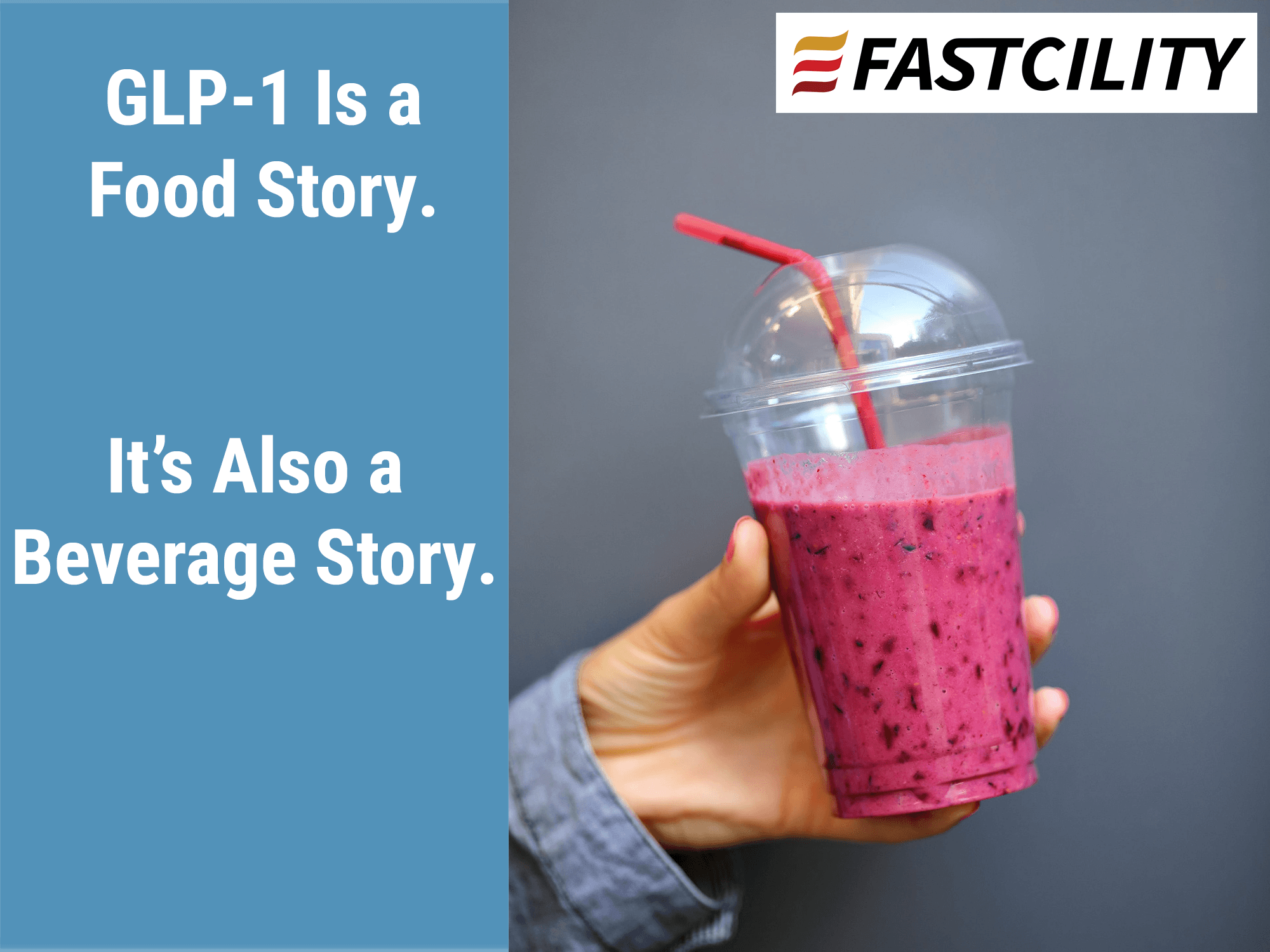
The food industry spent 2025 trying to solve the GLP-1 problem. Strategies included offering smaller portions, emphasizing protein-rich dishes, introducing half-size options, and highlighting GLP-1-friendly choices on packaging. The entire conversation was about food. Which is partly correct. GLP-1 users are eating less food. But they are not consuming less across the board. They are substituting. And what they are substituting toward, in measurable and growing ways, is beverages.
This aspect of GLP-1’s impact—how beverage consumption is changing—has largely been overlooked, even though it’s crucial for businesses that rely on beverage sales. While much has been written about food trends, the beverage angle deserves equal attention, as it significantly affects revenue streams.
The Scale of Adoption
The numbers justify the industry attention. According to a KFF Health Tracking Poll, approximately 1 in every 8 American adults is currently taking a GLP-1 receptor agonist medication such as Ozempic, Wegovy, or Mounjaro.¹ Gallup’s National Health and Well-Being Index found the share of Americans taking semaglutide or tirzepatide more than doubled between early 2024 and late 2025, reaching 12.4% of respondents compared to 5.8% in February 2024.² J.P. Morgan estimates the user population will grow from roughly 10 million today to more than 30 million by 2030.¹
The behavioral effects on food spending are documented. A Cornell University study using transaction records from approximately 150,000 U.S. households found that within six months of beginning a GLP-1 drug, households reduce grocery spending by an average of 5.3%. Fast food and coffee shops specifically experienced roughly an 8% spending decline after a household member started the medication.³
For the restaurant and foodservice industry, these numbers registered as a structural threat. The reaction was not entirely wrong. But it was incomplete.
What the Data Actually Shows About How GLP-1 Users Dine Out
Circana’s January 2026 research shows GLP-1 users aren’t leaving restaurants but are shifting their orders. They prefer main dishes over sides, snacks, and breads, with smoothies standing out as a top-growing menu choice due to their nutrient and fruit content. Sixty-three percent seek more vegetables and 55% look for more fruit when dining out, making blended beverages popular. While dinner traffic among GLP-1 users is down 6%, leading to a slight overall sales dip, breakfast habits are shifting away from sugary drinks and baked goods toward protein-enhanced cold beverages.
Overall, GLP-1 users are choosing different—rather than fewer—beverages.
The Physiology Behind the Beverage Shift
There is a clinical explanation for why beverages hold up even as food consumption falls. GLP-1 medications reduce food intake by slowing gastric emptying and stimulating insulin release, leading to less insulin production and increased electrolyte loss through the kidneys. This often results in cramping, fatigue, and dehydration.
To compensate for reduced calories and electrolytes from food, GLP-1 users turn to beverages like protein shakes, electrolyte drinks, and nutrient-rich smoothies. The beverage industry is capitalizing on this trend, with the market for GLP-1-friendly hydration products projected to reach $3.48 billion by 2033, growing at 12.8% annually. North America leads this segment, making up over 38% of global revenue.
Sean Harapko, EY Americas consumer products growth and beverage sector leader, described one of the clearest commercial manifestations of this shift: milk-based protein beverages. “If you look at one of the biggest growth areas that has come up over the last couple of years, it’s some of the milk-based products for protein,” Harapko told Beverage Daily in April 2026. “It’s a two for one: getting hydrated and also getting protein or nutrients in there as well.”⁶
The Industry Bet on Beverages Was Already in Motion
What makes the GLP-1 beverage dynamic structurally significant is not just that it is occurring in isolation. It is happening at precisely the moment the restaurant industry independently converged on beverages as its primary margin protection strategy.
Restaurant Dive reported in January 2026 that beverages are “poised to grow” as QSRs search for high-margin responses that do not add operational complexity, citing sustained consumer demand for cold, caffeinated, and photogenic drinks.⁷ The trade publication described major chains announcing premium drink programs as the QSR segment’s search for margin wins that do not require kitchen complexity.
The chain-level activity confirms the trend. Taco Bell launched its Refrescas beverage menu nationwide in June 2025 as part of what the brand described as an ambition to become a “beverage behemoth.”⁷ Dunkin’ opened 2026 by adding protein milk to its permanent menu. Chick-fil-A added floats and frosted sodas to its permanent menu in early January 2026.⁷ These changes are calculated investments in the category that carries the highest margin per transaction at the limited-service format.
The commercial logic is straightforward. Beverages carry higher margins than food at most restaurant formats.When food traffic slows, due to consumer price sensitivity or GLP-1-suppressed appetite, beverages become the category operators turn to in order to protect per-visit revenue. GLP-1 is compressing food demand from the consumer side. The industry is shifting its margin strategy toward beverages from the operator side. Both forces are pushing in the same direction.
Rethinking Equipment
Every one of these programs requires equipment to deliver it.
The 2026 commercial kitchen beverage equipment guide published by Aldevra identified cold brew systems, blenders, ice machines, tea brewers, beverage dispensers, refrigeration, and water filtration as the essential equipment infrastructure for the top beverage trends of the year.⁸ These are critical investments for operators who have made beverages their margin anchor. They are the revenue-producing assets the entire bet depends on.
The pressure on this equipment class has grown in direct proportion to its margin contribution. If a restaurant’s beverage program is now responsible for a larger share of revenue than it was two years ago.
Gary Stibel, founder of the New England Consulting Group, framed the underlying dynamic in Beverage Daily’s April 2026 coverage: “People who are consuming liquid meal replacements are after protein; particularly if you’re on GLP-1 drugs.”⁶ The implication for the equipment running these programs is equally direct. What was once a supporting category is now the primary play.
Footnotes
- CNBC, “GLP-1 drugs are changing how Americans eat,” March 21, 2026
- FoodNavigator-USA, “The GLP-1 effect: How 2026 will look for food and beverage,” December 15, 2025
- Cornell University Chronicle, “Ozempic is changing the foods Americans buy,” December 19, 2025
- Circana / GlobeNewswire, “GLP-1 Users Aren’t Ditching Restaurants, But Their Ordering Habits Are Changing,” January 14, 2026
- Beverage Daily, “GLP-1 drinks take off as brands race for $3.5bn functional growth,” March 4, 2026
- Beverage Daily, “How GLP-1 drugs are shaking up nutrition drinks,” April 4, 2026
- Restaurant Dive, “Drink up: Restaurants will spend more on beverage innovation in 2026,” January 21, 2026
- Aldevra, “2026 Beverage Trends & Commercial Kitchen Equipment Guide,” January 27, 2026